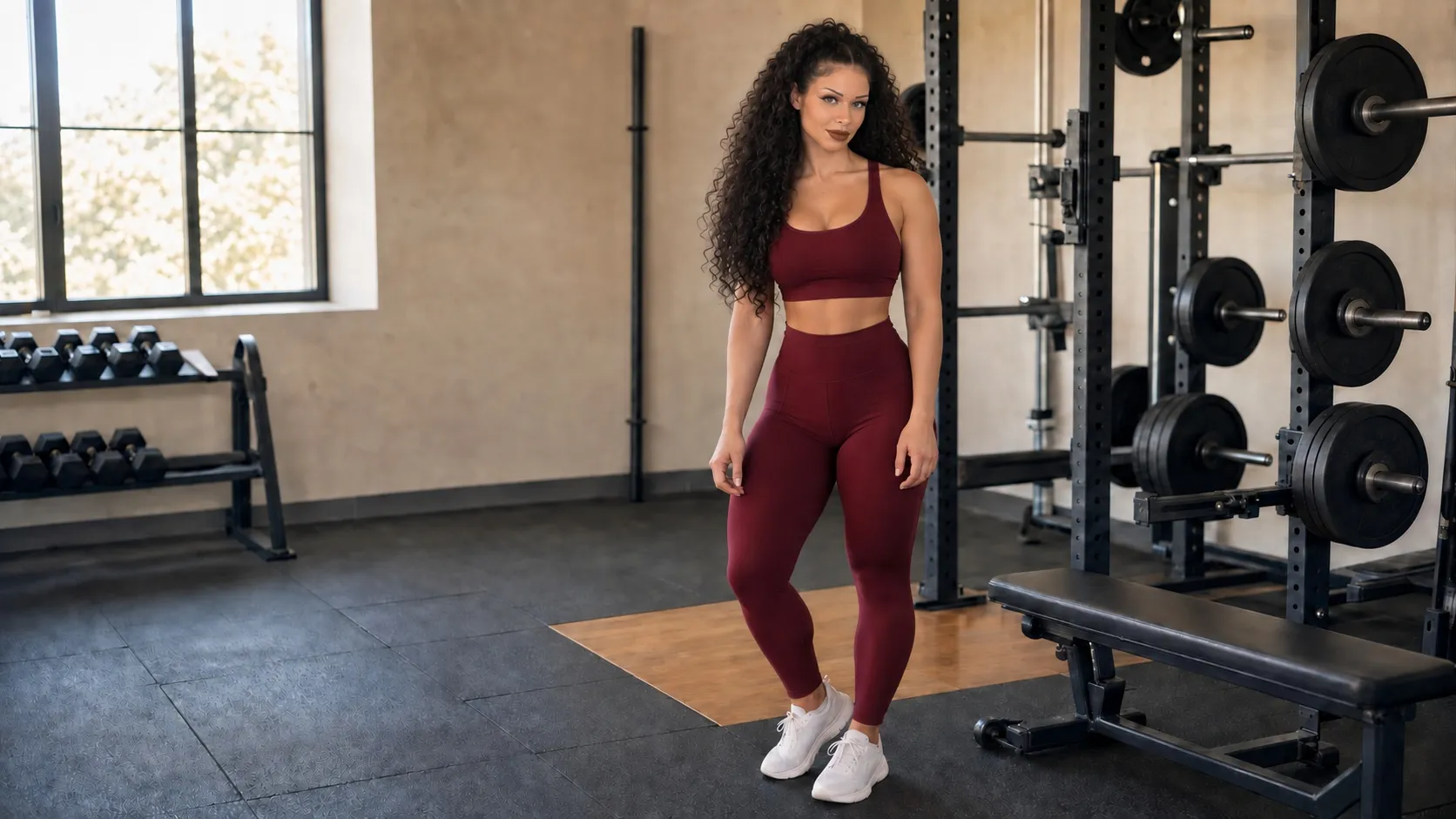
About Ariah
Ibuiltmybodyaroundmylife.Nottheotherwayaround.
I did not start out as someone who loved lifting. I was the stereotypical woman afraid of getting bulky. I ran, I did cardio circuits and HIIT, and at one point I had my body weight quite low. I still did not love what I saw. I wanted a smaller-looking waist next to my legs and glutes, more of an hourglass, and everyone kept telling me the same thing: if you want to change your shape, you have to lift.
So I joined a gym, and I was terrified of the weight room. For a long time I trained only in the small room with the pin-loaded machines: pec fly, shoulder press, leg press, leg curl, three or four times a week with a timer set for 30 to 45 minutes. The leg extension lived in the main weight room, so every workout I had to work up the courage to walk out there for exactly one exercise. And before any of that, I ran several miles on the treadmill, because I was not ready to give that up yet.
I was showing up. I was working hard. I just did not know how to train for the body I wanted.
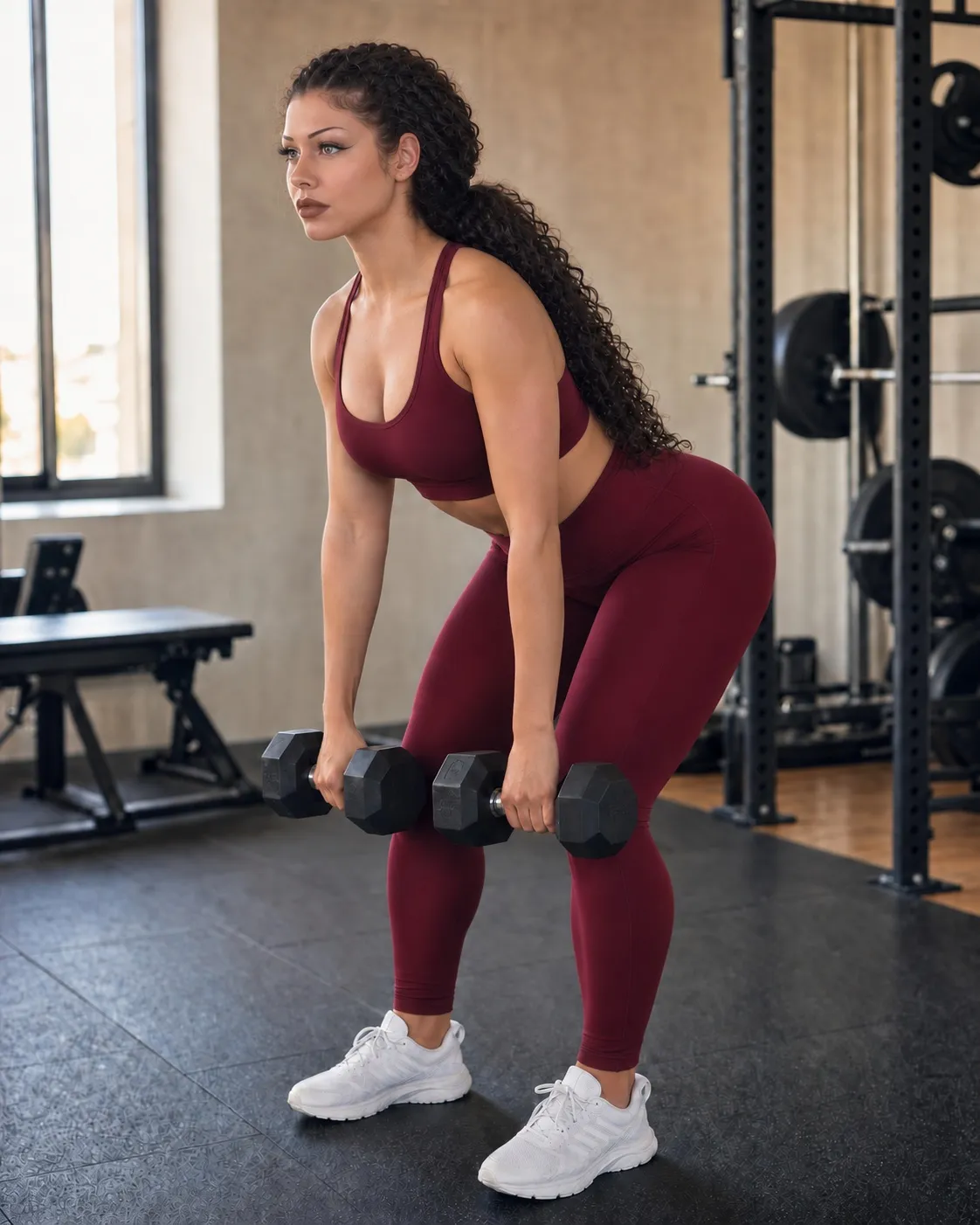
I asked for helpand got cardio
A few months in, my gym ran a promotion on personal training and I bought a package because I genuinely wanted someone to teach me how to lift. In the consultation I explained that I was already the queen of running, HIIT, and pin-loaded machines. What I wanted was to learn how to really strength train.
Most of those sessions turned out to be more cardio circuits, with a few strength exercises thrown in at the end. They were not bad workouts. They just were not what I had asked for. I stayed stuck in that cycle for a couple of years.
Then I started talking to one of the big, old-school lifters at my gym. It is hard to give him enough credit. He did not just teach me more exercises. He taught me how to actually train: how hard a working set should feel, how to approach an exercise with intention, what productive strength training looks like. And something clicked.
I did not need to keep getting smaller.I needed to build.
I was already at a healthy, and at times very low, body weight. Losing more was never going to create the shape I was chasing. I was undermuscled. That one realization changed how I approached everything.
These days there are periods when I gain weight on purpose, because building muscle means giving your body the resources to grow. That would have terrified an earlier version of me. The difference is that now I understand the process. Some body fat along the way does not mean I have lost control. I can build what I want, and when it is time to lose fat, I know how to do that while keeping what I have built.
Why I coach women
Somewhere along the way, wanting to change how my body looked turned into wanting to understand it. Why does this exercise work better here? Why did progress stall? Why does one approach work beautifully for one woman and terribly for another? Is something actually supported by evidence, or has it just been repeated enough times that everyone accepts it?
I love the research. I love looking for patterns and figuring out how the pieces fit: training, nutrition, recovery, lifestyle, adherence. I have taken my own goals a long way down the bodybuilding rabbit hole. You do not have to. The same fundamentals apply to much simpler goals, and you do not need to want to compete to benefit from learning how to train well, lose fat, and build muscle where you want it.
Mostly I coach because I remember what it felt like to put in the effort without knowing whether I was doing the right things. I remember being intimidated by the weight room, asking for guidance, and still not learning what I wanted to know. I want to be the resource I did not have.

How I coach
Your plan should fit you. There is an epidemic of cookie-cutter plans handed to people without much thought for the person expected to follow them. Your goals, your schedule, your preferences, your training history, your equipment, your recovery: all of it matters. Even the little things. If you hate blueberries, I am not going to make you eat blueberries every day because they are a great source of antioxidants. They are great. They are also not so magical that we cannot find something you actually enjoy. The theoretically perfect plan is not useful if you hate following it.
The other 163 hours matter. Even if you spend five hours a week in the gym, and that is generous, there are another 163 hours in your week. Your sleep, stress, work, social life, and daily habits shape what we can do. Coaching is not just writing workouts. It is helping you build a routine that moves you toward the physique you want without your whole life revolving around fitness.
Ask me why. I am your coach, but this is not a dictatorship. Why this exercise? Why are we changing your nutrition? Why are we changing nothing this week? Why am I asking you to track something? I want to be able to explain every decision. I am naturally analytical, and I would rather look at the whole picture and the patterns over time than react to one workout, one meal, or one weigh-in. Data serves you, not the other way around. If you have a hard boundary around something like the scale or photos, I will respect it and we will find another way.
Consistency matters. Perfection does not. Work gets busy. Vacations happen. Workouts get missed. When a week goes badly, my job is not to make you feel guilty or tell you to try harder. We look at what happened, figure out what got in the way, and decide what needs to change. You will always know what we are working toward, what matters most right now, and what to focus on next.
I want you to understand it. You can ask questions, disagree with me, tell me something is not working, tell me you hate an exercise. The more you give me, the better I can coach you. And when you reach a goal, we decide together what comes next. You do not have to figure out the next phase alone.
How I learned
Years of training and building my own physique, first under an experienced lifter and then through my own reading and testing, with a habit of checking what the evidence actually says before I ask you to do something. I coach the way I trained: with a plan I can explain.
Outside the gym
[Two or three sentences. Family, hobbies, where she lives, what she does on a Sunday. This is what makes her a person to a reader.]
Ready whenyou are.
Five minutes to apply. I read every one personally and reply within two business days.